
The article: https://www.ncbi.nlm.nih.gov/pmc/articles/PMC2583418/
It says:
An animal hoarder is defined as someone who has accumulated a large number of animals and who: 1) fails to provide minimal standards of nutrition, sanitation, and veterinary care; 2) fails to act on the deteriorating condition of the animals (including disease, starvation or death) and the environment (severe overcrowding, extremely unsanitary conditions); and often, 3) is unaware of the negative effects of the collection on their own health and well-being and on that of other family members.
Hoarding is a mental disease. An illness. Some people hoard inanimate objects and that would be their problem as the inanimate objects are not living, breathing beings. But when it comes to animal hoarding, that would be a totally different story because now, it involves lives. Animal lives – living, breathing beings, capable of experiencing pain, sadness and suffering.
We have encountered at least two big-time animal hoarders in our course of work over the years. Those who have been following this blog might remember. One was up north and her dogs were in an unbelievably deplorable condition. The other was nearby, all her dogs un-neutered. It was heart-breaking and yet, all animal lovers know this. If it is reported, the human might just be slapped a fine, but the animals will be confiscated and suffer a very sad and unjust end. No animal lover wants this to happen.
But apart from big-time hoarders, there are also the small-time ones. This would be those “rescuers” who keep 50 animals in a small apartment without proper hygiene and basic care. And they think they are doing something very noble, but the fact is, they do not have enough money or resources to care for the animals. And yet, “No one can do a better job for these animals than me.”
The moment we take an animal off the street and bring them into our homes, it becomes our responsibility to care for them. If they are left on the street, they fend for themselves. They can probably still hunt for food. So if we take them into our homes, confine them, then it is our responsibility to at least feed them. Food is a basic need. If we cannot even provide food, then please….don’t take them in. Next comes medical care and other well-being aspects. Letting a sick animal suffer and die a slow and agonising death is extremely cruel. Medical care is expensive and adopting a pet is a huge long-term responsibility.
That said, we have also encountered another brand of hoarders. This would be those who hoard animals to make money. With social media at their expense, “rescuing” an injured animal (the more hideous the injury, the better) and publishing all the photos on social media is an avenue to get donations from generous and kind-hearted Malaysians. Is there any follow-up after that? Is the animal even taken to the vet for treatment?
Cheating and lying is also a mental disease. It stems from greed.
This is precisely why we stopped our Medical Fund in 2015. After doing it for a few years, we witnessed enough cases of attempted cheating and abuse. It was just too much work tracking down the animals and checking the authenticity of the receipts, the treatment supposedly done, getting follow-up news on the animal, etc. It suffices to say that we have no plans to revive the Medical Fund.
So, animal hoarding and using animals to make money – is there a solution to this malady? Expecting some humans to check their own conscience is not a solution because some humans are simply so blinded by greed and a huge ego that they are no longer in touch with their conscience. Waiting for karma to take its course? Haven’t we seen enough of bad things happening to good people and vice versa?
Hence, grant us the courage to change what we can, the serenity to accept what we cannot and the wisdom to know the difference. And let our conscience be our guide.
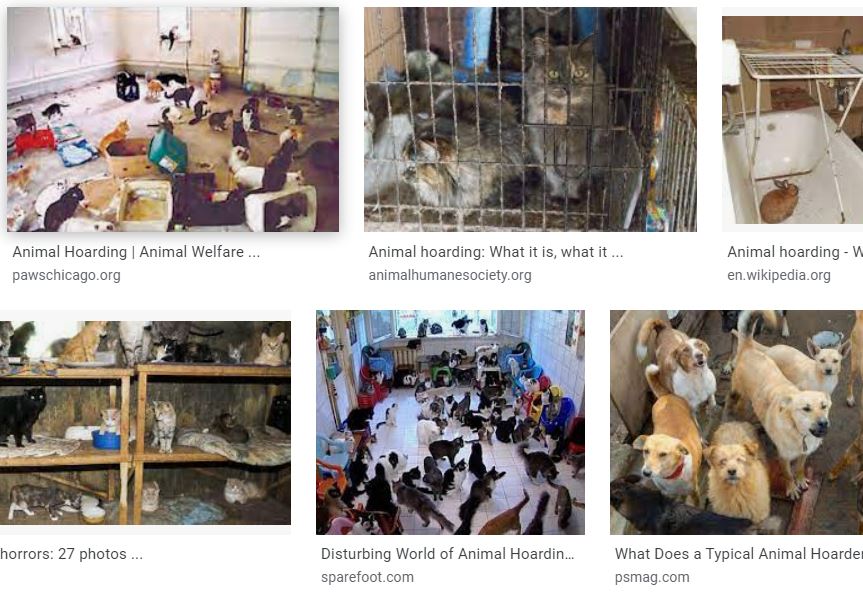 These are images from Google.