
The short answer; While some dogs do well on a vegetarian diet, cats do not.
Here’s why.
These are articles written by veterinarians:
Dr Justine A. Lee: https://www.pethealthnetwork.com/cat-health/cat-diet-nutrition/it-possible-or-safe-make-your-pet-a-vegetarian
Excerpts:
About 15 years ago, I treated a young, 15 month-old cat for a severe, rare type of heart disease called dilated cardiomyopathy (DCM) – thankfully, we hardly see this type of heart disease anymore in cats. This kitten had an extremely loud heart murmur (meaning the sound was abnormal when I listened with a stethoscope). The severity of the heart murmur was graded a 6/6 (with 1 being the softest and 6 being the worst). The cause of the heart murmur? Inappropriate diet. The cause of this kitten’s heart disease was the owner’s fault, as the owner made the kitten a vegetarian (forcing his dietary beliefs on his pet).
We don’t see this type of heart disease as much as we used to thanks to better nutrition. Veterinarians were able to link certain types of DCM to the lack of taurine, an essential amino acid (essential means that the body can’t make it, and it’s imperative that the diet contain it).
What should you learn from this? Don’t make your pet – especially your cat – a vegetarian.
While dogs are omnivores (they can eat both plant and animal sources of protein), cats are strict carnivores. While there are cat vegetarian and vegan diets commercially available, these are never recommended by veterinarians (well, at least the good ones).
Please don’t make your cat a vegetarian.
Dr Jennifer Coates (herself a vegetarian): https://www.petmd.com/cat/nutrition/can-cats-be-vegan-or-vegetarian
Excerpts:
It’s not advised to put your cat on a plant-based diet. It’s very difficult to make vegetarian—and especially vegan—cat foods that are nutritionally complete and balanced. Why? Cats are obligate carnivores, meaning their anatomy and physiology are designed to get the nutrients they need from animal tissues, not from plants.
This is different from dogs, who are omnivores, meaning they’re designed to eat foods of both animal and plant origins. The feline intestinal tract is significantly shorter than a dog’s, even taking their different body sizes into account. A cat’s intestine-to-body-length ratio is only 4:1, in comparison to the canine ratio, which is 6:1.
Cats have shorter intestines because the animal-based foods they’re designed to eat don’t contain fiber, so they’re easy and quick to digest. Dogs, on the other hand, benefit from a longer intestinal tract that can extract nutrients from plant-based foods. Dogs also have relatively flat molars (teeth at the back of their mouth) that can grind up fibrous food. Cat molars are sharp and made for shearing off pieces of meat.
Additionally, a cat’s pancreas makes less amylase compared to a dog’s. Amylase is an enzyme that breaks down dietary starches that are found only in plants. Cats can handle some starch in their diets, but too much can lead to diarrhea.
The importance of taurine for cats:
The importance of protein continues down to the level of amino acids, the building blocks of proteins. The amino acid taurine is an excellent example. Dogs can convert other, more commonly available amino acids into taurine. Cats can’t, so they require an ample supply of taurine in their diet. The AAFCO doesn’t even set a minimum level for taurine in dog foods, but they have for cat foods.
Meat and seafood are foods high in taurine, while vegan sources of taurine are hard to come by. Marine algae contain some taurine, but at about one-tenth the concentration available in meat and seafood.
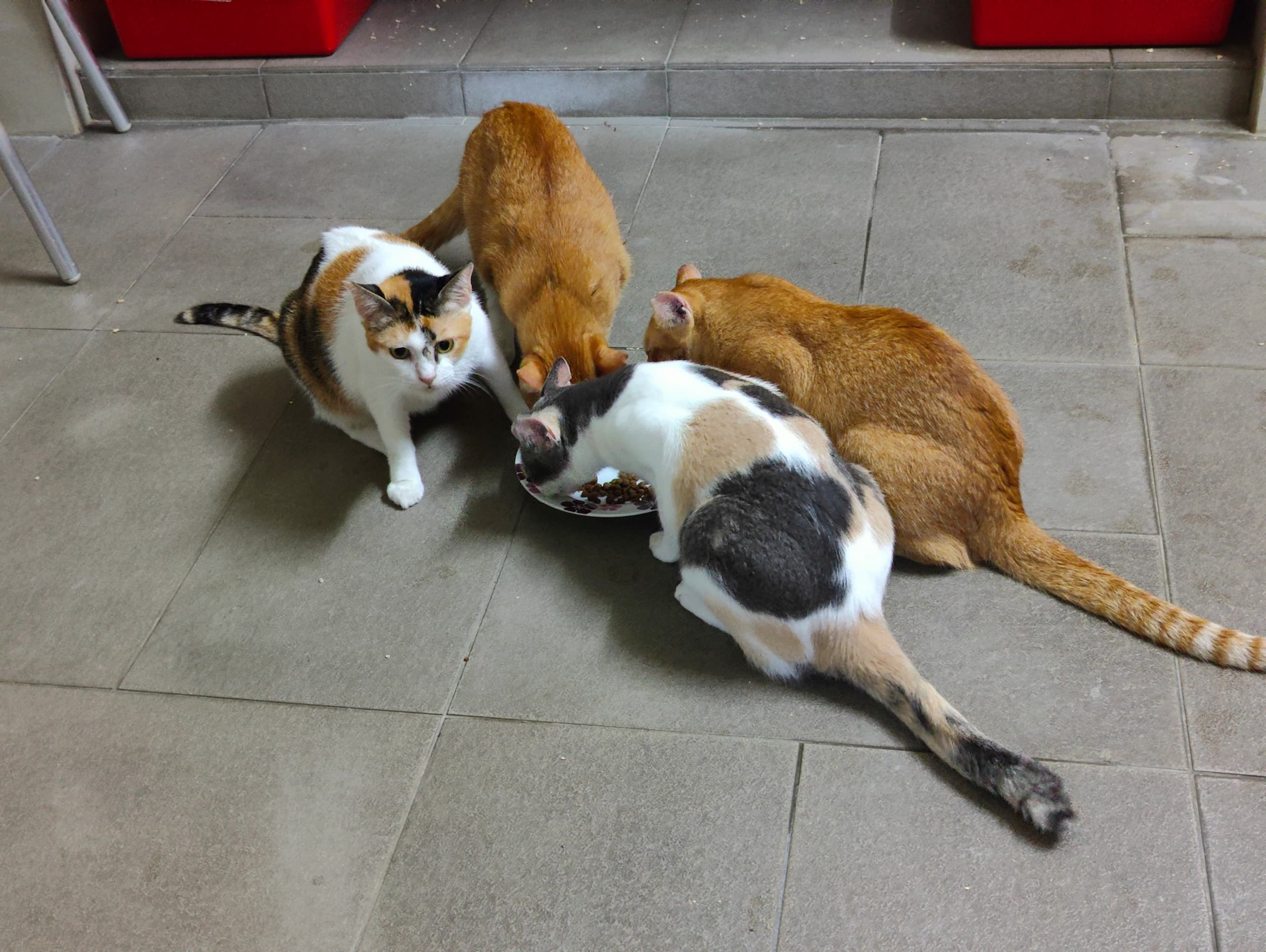
So while we humans observe Meatless Monday tomorrow, our cats will continue eating meat.
That’s just how life is….
But what about dogs?
Dr Jennifer Coates: https://wildearth.com/blogs/news/the-benefits-of-plant-based-dog-food-video-by-dr-jennifer-coates
A youtube by the same vet: https://www.youtube.com/watch?v=ddUJPV5kbNM

Excerpts:
It is true that dogs belong to the order Carnivora, but they are actually omnivores. The canine body has the ability to transform certain amino acids, the building blocks or protein, into others, meaning that dogs can get all the amino acids they need while avoiding meat.
So, if feeding meat to your dog presents an ethical quandary for you, options are available. And even if you’re happy that your dog’s food contains meat, know that the inclusion of plant-based sources of protein helps to balance the diet’s nutritional profile.
We must stress here that we are in no way encouraging you to turn your dogs into vegetarians. Some dogs may not do well on a vegetarian diet while some may. But dogs are omnivores so some vegetables will help add the needed fiber to their diet.
Conclusion:
Cats should not be vegetarians.
Dogs can be vegetarians.
So, there’s no new news. It’s the same old news!