
We all know about how if bees were to cease to exist, human life wouldn’t last very long after that since we totally depend on bees to pollinate plant life.
But bats too?
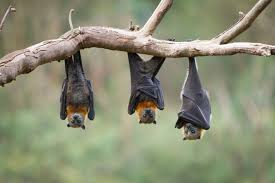
On pollination: Many experts believe that the birds and bees take the day shift and the bats take the night shift.
Read the full story here.
Excerpts:
Bats’ Pest-Control Services Save Farmers More Than $1 Billion
One of bats’ claims to fame, aside from pollination, is their voracious appetite for insects. A pregnant or nursing bat may eat her own body-weight worth of insects each night, and night-flying insects, including the corn earworm moth, are a favorite food.
The corn earworm moth (or more specifically, the moths’ larvae) cause major damage to U.S. corn crops. Researchers from Southern Illinois University (SIU) wanted to find out what happens when bats aren’t allowed to feed freely on the moths, so they built large outdoor enclosures over cornfields in Southern Illinois.2
The enclosures were covered in nets that let insects in but kept bats out. The corn grown within the enclosures had significantly more larvae-damaged kernels – by 56 percent – and less fungal damage.
The researchers noted that bats “suppress pest-associated fungal growth and mycotoxin in corn” as well as increased crop yield by 1.4 percent, which adds up to a difference of more than $3 an acre.
In attics, many people don’t know mice are usually present, yes even if there is no signs of them in the living space. When it comes to identifying mice droppings and bat guano, even more confusion can arise. So what does bat poop look like? Unlike mice poop, bat poop is longer and will have metallic flakes from the wings of insects. It can also be in large piles were roosting takes place.
Pollination Is Another Bat Benefits
While some bats provide pest control, nectar-feeding pats act as beneficial pollinators. Giant cacti and agave are just two types of plants that depend on bats for pollination, and in the tropics over 500 different types of tropical plants are pollinated by bats every year.
Examples of foods that are pollinated by bats include bananas, peaches, cloves, carob and agave (used to make tequila). This pollination occurs courtesy of a very long tongue. As explained by Bat Worlds:7
“Bats tend to like flowers that don’t give off strong scents or offer bright colors. This is the opposite of what attracts bees. These types of flowers that the bats like also seem to have lots of nectar offered in them.
Many experts believe that the birds and bees take the day shift and the bats take the night shift. Everything that we know about pollination in the day time occurs at night with the bats.
What about the birds that have long beaks to get the nectar from flowers? Bats don’t have that feature but they are able to pollinate. The process is one that involved a very long tongue.
When the bat isn’t using it, this tongue is rolled up in the body, underneath the rib cage. When they are using it they have complete control over such movements.”
Bats Are “the Farmers of the Tropics”
Fruit-eating bats are sometimes called the farmers of the tropics because they are incredibly efficient at dispersing seeds. They’re especially essential to regenerating clear-cut forests, which requires seeds to be dropped over large, open spaces – areas where birds are reluctant to fly.
Bats cover large distances while feeding at night and defecate while flying, which means the seeds in their feces are scattered across the vast open expanses of clear-cut rainforests. According to Bat Conservation International:8
“ … many of the bat-dispersed seeds are from hardy pioneer plants, the first to grow in the hot, dry conditions of clearings. As these plants grow, they provide the shelter that lets other, more delicate plants take root. Seeds dropped by bats can account for up to 95 percent of the first new growth.
The pioneer plants also offer cover and perches for birds and primates, so they can add still more, different seeds to the mix that can lead eventually to a renewed forest. Bats have been reported dispersing the seeds of avocado, dates, figs, and cashews — among many others.”
Comments
One response to “Bats can be as important as bees and butterflies”
No bats also no durians!