
After visiting Hachiko at Shibuya, we took another train which led us to the Meiji Jingu or Meiji Shrine.
Located in the heart of the city, but once you enter, it is an entire forest!
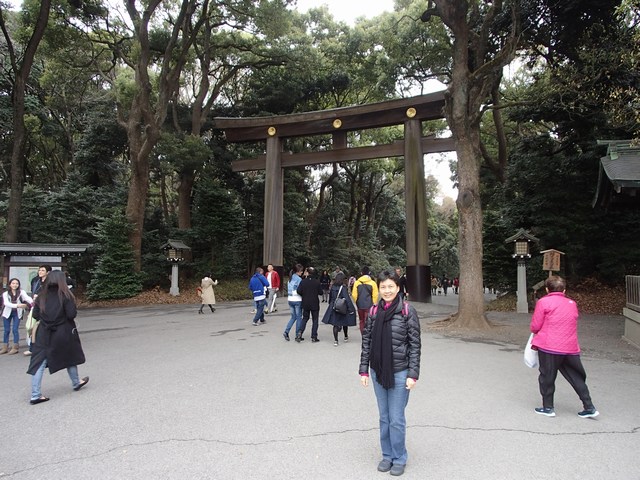
Meiji Jingu Shrine is built in the traditional nagare-zukuri style with Japanese cypress. It is the largest Shinto shrine in Japan. By large, it is REALLY large, spanning over 175 acres. The evergreen forest consists of around 120,000 trees of 365 different species, donated by people from all regions of Japan.
Meiji Shrine (明治神宮, Meiji Jingū) is a shrine dedicated to the deified spirits of Emperor Meiji and his consort, Empress Shoken. Located just beside the JR Yamanote Line‘s busy Harajuku Station, Meiji Shrine and the adjacent Yoyogi Park make up a large forested area within the densely built-up city. The spacious shrine grounds offer walking paths that are great for a relaxing stroll.
The shrine was completed and dedicated to the Emperor Meiji and the Empress Shoken in 1920, eight years after the passing of the emperor and six years after the passing of the empress. The shrine was destroyed during the Second World War but was rebuilt shortly thereafter.
Emperor Meiji was the first emperor of modern Japan. He was born in 1852 and ascended to the throne in 1867 at the peak of the Meiji Restoration when Japan’s feudal era came to an end and the emperor was restored to power. During the Meiji Period, Japan modernized and westernized herself to join the world’s major powers by the time Emperor Meiji passed away in 1912.
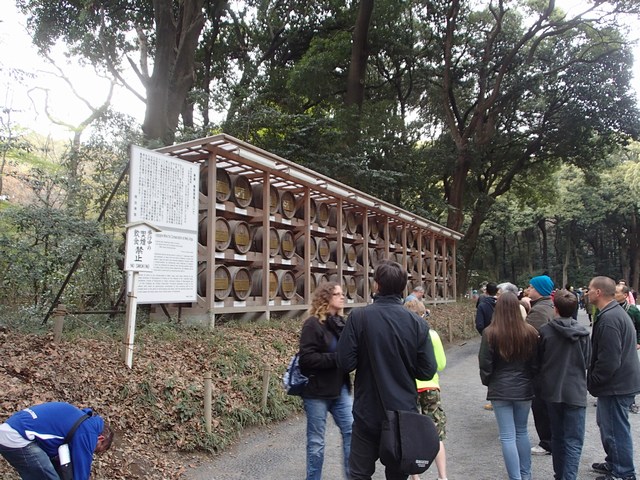
There are barrels of sake on both sides of the entrance, donated by sake brewers throughout Japan to commemorate the late emperor’s modernisation efforts.
We had to walk very far up to the main building.

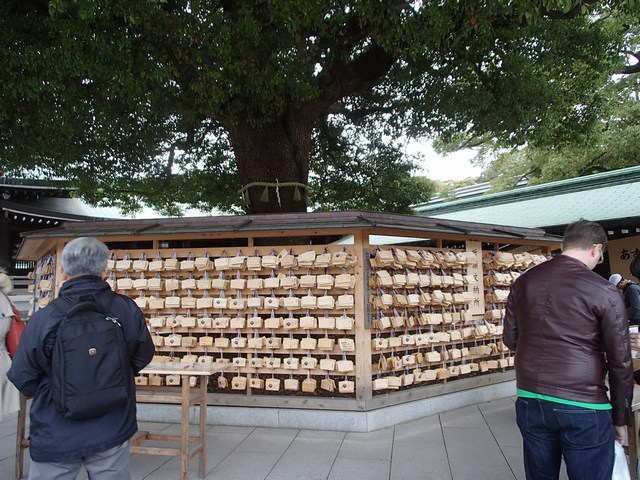
At every temple we visited, there will be these little tablets. On it are messages written by visitors.
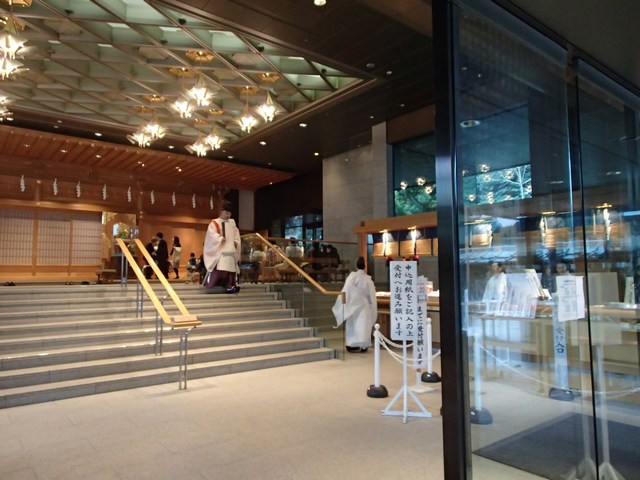
A Shinto ceremony was in session. It looked like a blessing ceremony for babies.

We did not see the entirety of the Meiji Shrine since the place was huge and it was already getting late.
So, we headed out and took the trains back to Ueno Park.

It was Saturday evening and the “party” was just beginning.
Once a year, during the Sakura full bloom, the Japanese people would picnic under the trees. It is an occasion of joyous celebration. They would place cardboards on the grass, then line it with a large piece of tarpaulin, then sit under the trees well into the night, overnight until the next day while drinking,eating and having a wonderful time.
We joined in the celebration by savouring local food, freshly prepared, at the park. Stalls were set up selling food and souvenirs.
It was truly a most happy atmosphere.