
I’m going to discuss two issues in this post. CNRM vs Shelters and the importance of getting our animals neutered.
CNRM vs Shelters – which one helps the animals more?
There is no right or wrong answer as each one has its advantages and disadvantages.
CNRM where the R = Return to Colony (and not Rehome):
Pros
- The animal is neutered and cared for (hence, the C=Care and M=Manage). Food and medical treatment are provided.
- R=Return to Colony, the animal is back where they are comfortable, their home, in their original habitat. They are free, as most animals would prefer to be.
Cons
- There may be dangers in their original habitat and this ranges from human cruelty to various type of accidents.
As for shelters, it all depends on the size of the shelter, the number of animals in it and whether there are sufficient funds to sustain it (food and medical treatment will depend largely on funds and the willingness of the operator to spend on the animals). Being inside a shelter means the animal is shielded from dangers on the street. But are there other dangers inside a shelter? Neglect? Hunger? Insufficient space?
When animals are confined in a shelter, they are totally and completely dependent on the shelter operator for their existence, let alone needs and comfort. If the operator has no money to buy food, they starve. But when they are outdoors, at least they still have a chance to hunt for food. I have heard of a certain shelter where the dogs were fed discarded meat which already had worms in them because the operator was unwilling to buy them decent food. There were funds, but it was used for “other things”.
Even in properly-run animal shelters, how sustainable are they? The operator would have to be very efficient in raising sufficient funds to keep it going AND maintaining the passion to run it properly and care for the animals’ wellbeing because the animals’ lives are, literally, in their hands.
Talking about this, we sometimes hear of homebased shelters that keep too many animals. There are laws in this country that only allow a certain number of dogs to be kept in a residential home. So keeping more than this permitted number may be very risky unless nobody complains. The moment someone reports the case, the authorities will investigate. Then, what will happen to the animals? If the authorities insist that the animals be moved, who can take over all the animals? We sometimes hear of operators resorting to mass euthanasia because they do not know where to put their animals.
Is this fair to the animals whom they had taken supposedly under their care?
Wouldn’t it have been better if the animals had been neutered and returned to the street to be cared for despite the dangers on the street? These are questions that all potential homebased shelter operators have to ask themselves before starting one. There is no such thing as “come what may, we will figure it out later” or worse, “the Universe will provide” when lives are in our hands. There has to be a long-term plan.
And even if nobody reports to the authorities, are the animals thriving in these homebased shelters? Or are they simply kept in cages all the time? Do they have sufficient space to express their natural behaviour?
Then there is the problem of operators who do too much, take in too many animals at a whim until they can no longer cope. Then what happens to the animals again? Cast them back out on the street? Mass euthanasia?
For those who want to start a shelter, please consider carefully if they will be able to sustain the shelter for the long term. Please do not do it on a whim and be caught in a helpless situation where the animals, instead of being safe from harm, end up worse off than being on the street.
For those who do not have that sustaining ability to maintain a shelter, then may we suggest that you practise CNRM instead? Adopt some but only the number that you can handle in your home, rehome the rest as far as you can, and for the ones you cannot rehome, get them neutered and returned to colony but continue to look after them there.
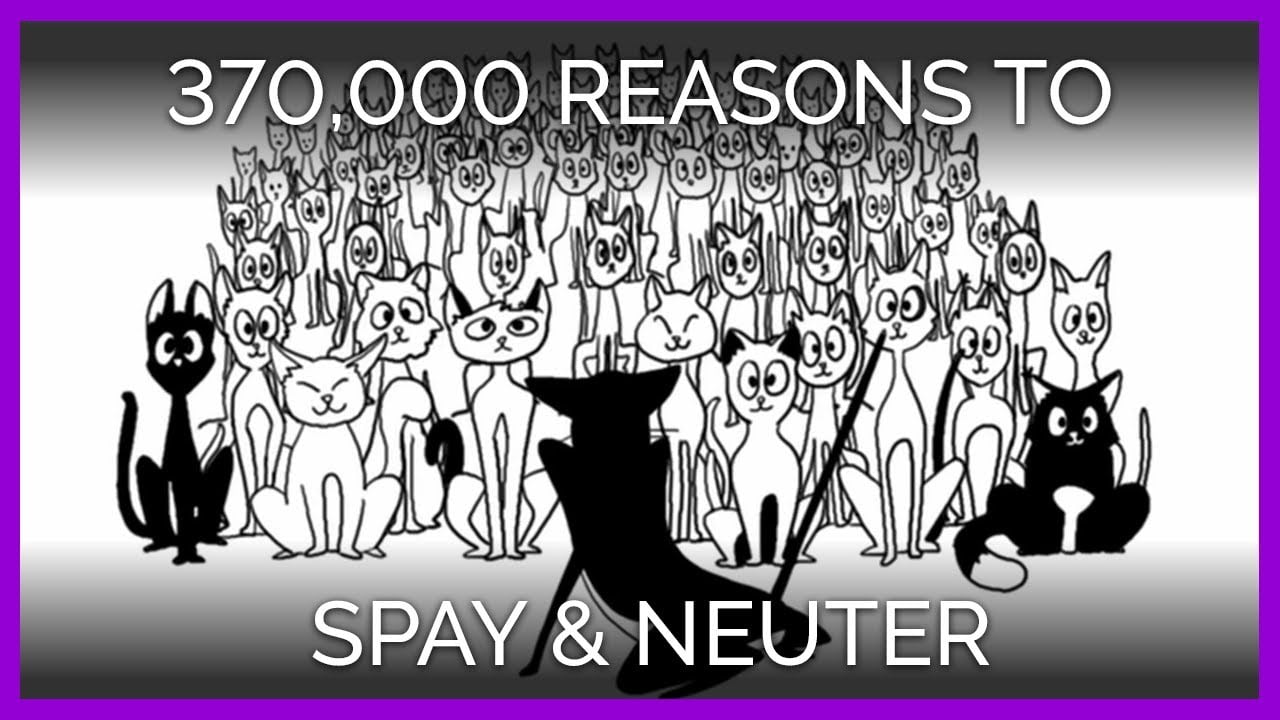
And please remember to get them neutered to stop the breeding. Any responsible feeder/rescuer must get their animals neutered. If you are a street feeder but are not willing to make the effort to get the animals neutered, then truly, you might as well not feed them because feeding will encourage breeding and breeding will lead to a fast increase of the population. Can you continue feeding this exponentially-increasing population? Will the large population incur the annoyance of the neighbourhood and result in unhappy neighbours calling the council to have the animals captured? Then, what are you going to do? Spend thousands to bail them out? Wouldn’t it have been better to use that money to get them neutered in the first place? And if you are already feeding them, don’t you need to spend money on food? Why not use a portion of that money to get them neutered? Then you do not have to feed a growing population but only need to maintain that fixed number of animals in the colony.
For example, in my old neighbourhood, we only had 6 cats (Cow, Bunny, Pole, Cleo, Indy and Tiger). And we only had this fixed number throughout the years we stayed there. Just before we moved, Tabs wandered in (most likely being abandoned or left behind as she came with a collar). So we took all 7 to our new neighbourhood and confined them indoors.
So, back to the question at the beginning of this article: CNRM vs Shelters. Which one?
Remember that no matter how many shelters are built, they will always be full. Not only that, humans might dump animals at your front gate. This is a fact. Managing a shelter isn’t the only way to help street animals. CNRM is also a way. Which is better would depend on whichever you can provide better for the animals under your care. It depends on how much you can do. But whether you are doing CNRM or you are running a shelter, please get the animals neutered. There is no compromise on this.
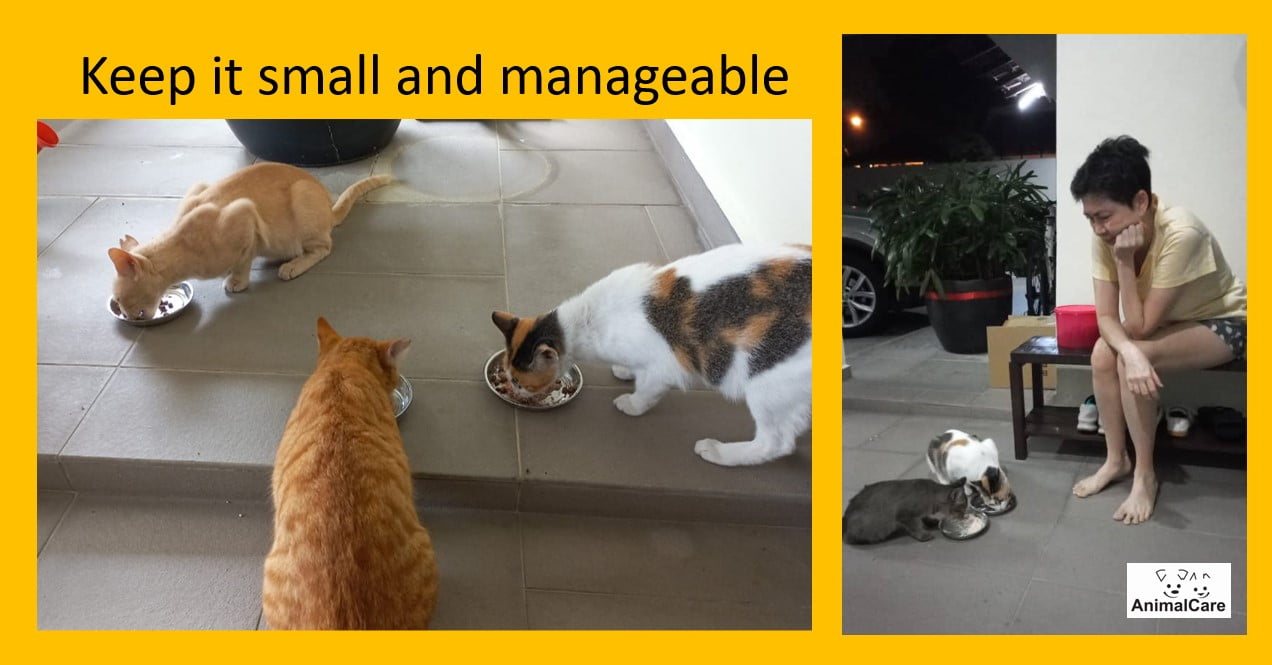
And please do not do too much. Remember that as one person, we cannot save the world. So, just save as many as you can, but save them well.
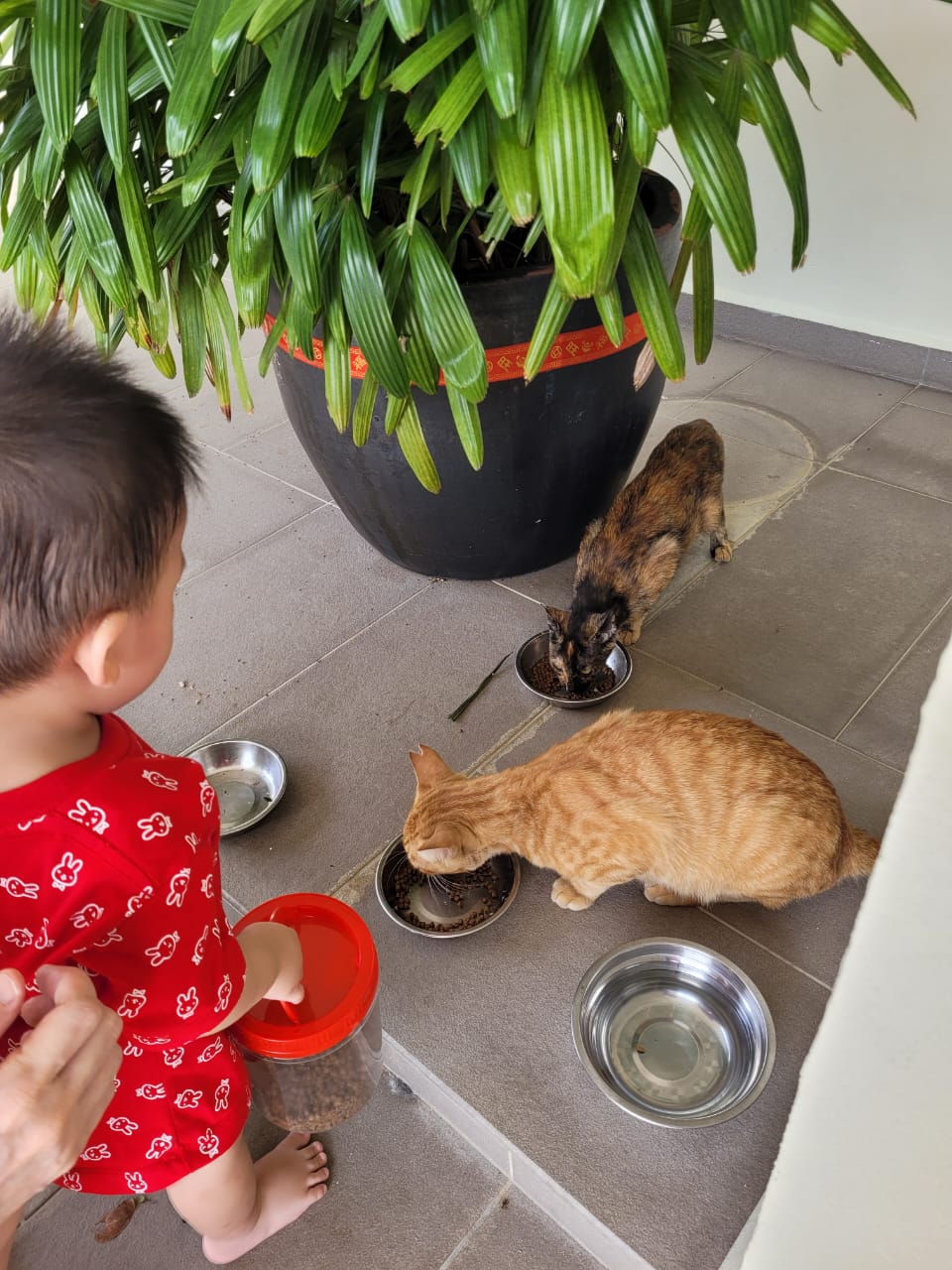
Above, you will see the five neighbourhood cats whom my grandson, Jayden and I have fed and got neutered in the last four months. There’s Creamy, Gerald, Samantha, Misty and Riley.
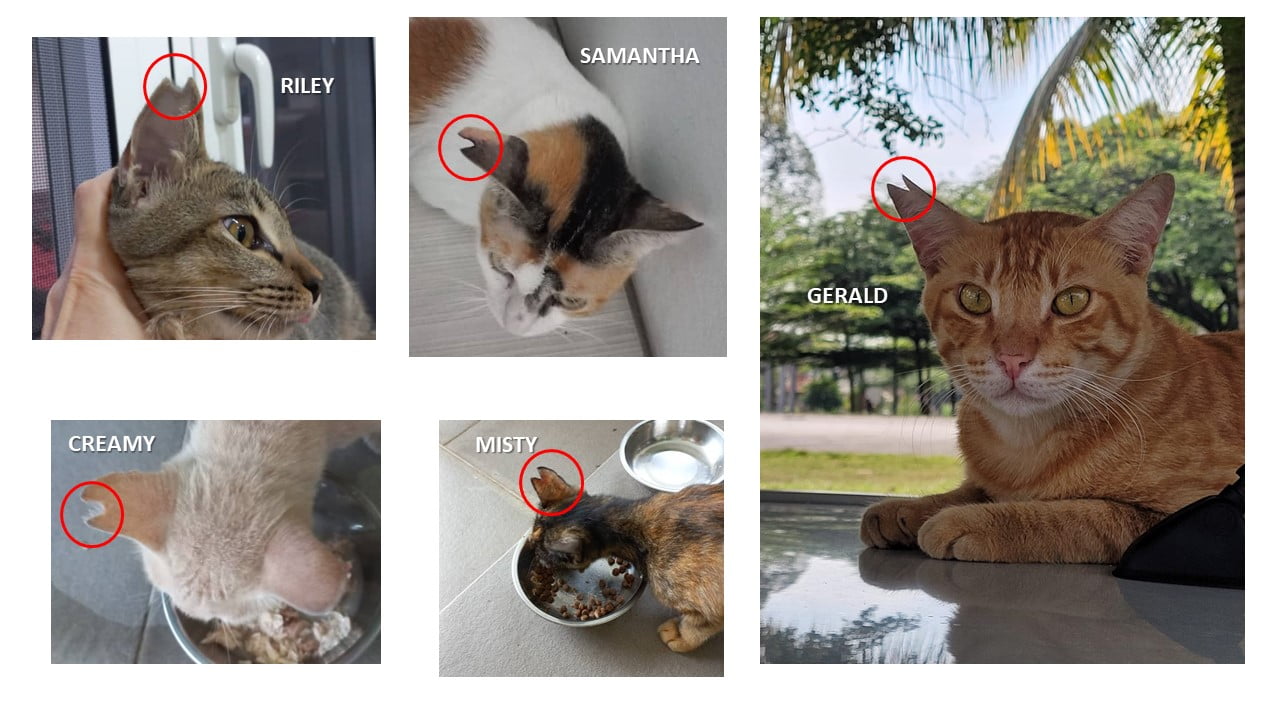
We adopted Riley because she was just a kitten when first rescued. Creamy, Gerald and Misty have been returned to the colony as CNRM-cats. Samantha was taken indoors to let her deliver her last litter safely and we have not decided if Samantha will be returned to colony or will continue staying indoors with her kittens. But whatever it is, Samantha has finally been neutered now. So even if she escapes, there is no danger of her getting pregnant and losing all her kittens again (like the batch before this one when I was not able to catch her yet).
We now have Samantha’s kittens from her last litter, Kai, Akira and Indra. And we have Misty’s kitten, Hiro, whom Misty brought to our porch for help. If they are not adopted out, all four will also be neutered when they come of age.
There was also Furby, a small longhair who came on his own to our porch. But he is adopted now, and the adopter will get him neutered after Hari Raya.
In this neighbourhood alone, since we moved in, I have got 20 cats neutered (the number isn’t fantastic and it’s nothing to shout about but it’s what I can do within my means). Some were neutered and adopted, the kittens were rehomed and some neutered and returned to the colony and cared for.
I will not promote something which I cannot do myself.
For the record, on a personal basis, I’ve rescued 83 animals since I started rescue work in 2006 with Cow, Bunny and Pole as my first rescues. This does not include the pound rescues done under AnimalCare. Again, nothing to shout about but the point I want to drive home is this: Please do within your means and do your best for the animals, not for yourself, not for you to feel good, not to get rewards and blessings, but do it for the animals. Period.